The Problem I Kept Seeing
When I started in strategy, I struggled with the same problem you probably face right now.
I'd be in a meeting and someone would ask: "What's this competitor doing differently?", or "Should we prioritise this channel?"
And I'd... guess. Or worse, I'd say "I'll look into that" and spend the next 4 hours manually clicking through a company's website, reading blog posts, and compiling vague observations like "They seem super active on social" or "This website looks conversion-focussed."
When I presented my findings, stakeholders would nod politely but clearly wanted more.
More confidence.
More specifics.
More data.
Meanwhile, there was always someone, let's call him Jacob, who'd casually share his findings:
-
•
Actually, Competitor X gets 450K monthly visits, up 32% quarter-over-quarter, with 61% from organic social, 18% from paid social (primarily LinkedIn), 8% from direct, 6% from referrals.
-
•
But here's the thing, they just launched a new lead magnet
/roi-calculator that drove 21K visits from *this* YouTube video - their UTM parameters (utm_source=youtube&utm_campaign=q4_enterprise_push&utm_content=vp_sales_calculator) show they're targeting VP-level buyers with ROI-focused content to expand into enterprise customers.
-
•
Their page architecture reveals the extent of this shift: Their
/enterprise subfolder traffic grew 215% QoQ while /startups remained flat - the uptick is significant and it's clearly their priority right now.
-
•
They're bidding on OUR brand name in paid search (spending est. $3,200/month, *here* are their highest-performing ads)
-
•
And they recently added Segment and Mixpanel to their tech stack, signalling a major customer data infrastructure buildout powering these ICP expansions.
Everyone in the room would lean forward and smile at each other.
And I'd think: "Where the hell did he get that data?"
The Attempts That Failed
I tried everything to close this gap...
I bought strategy books, but they were too theoretical - abstract concepts with no practical application for internet-native strategy.
I watched YouTube videos on 'competitor analysis' and 'strategy frameworks', but they were generic and basic - nothing I could actually use.
I looked into research tools but didn't know which to use, how to extract useful insights, or how to get real value from them without paying for a subscription.
And the frustration kept building because I knew this skill gap was costing me.
My ideas got tabled because "we need more data first."
Strategic projects went to colleagues who could back their ideas with numbers.
→ I was seen as a "contributor" - good at execution, but not strategic enough for the next level.
The Breaking Point
During my annual review, my manager said: "You're great at execution. You're a killer in PowerPoint. But you need to think more strategically to get promoted."
I realised: if I didn't fix this now, I'd watch another year go by. Another promotion cycle. Another colleague moving up whilst I stayed stuck.
That's when I decided to build my own system.
How I Figured Out a Solution
I started systematically researching every tool and tactic available for analysing websites and traffic.
Not the expensive enterprise software or 'industry reports' that costs $1000's per month - but the free tools, browser extensions, and overlooked data sources that anyone with an internet connection can access (if you know where to look).
I tested everything. Semrush. Ubersuggest. Wappalyzer. Built-in browser tools. UTM parameters. Backlink maps. Domain architecture analysers.
I documented exactly what added value to me at work, versus those that led to nothing useful. Which dashboards gave relevant data. Which tactics actually generated wildly-useful insights I could present with confidence. Which techniques took 2 minutes versus 2 days.
And then I used this X-ray vision system every single day in my work.
Suddenly, I was the one presenting traffic breakdowns in meetings. I was spotting tech stack changes that signalled strategic shifts. I was identifying hyper-specific customer needs based on questions they were asking and solutions they were actively searching for.
My recommendations stopped getting questioned, and started getting implemented.
Turning It Into a System
Over time, other strategists started asking: "How did you find that?" and "Can you show me how to do this?"
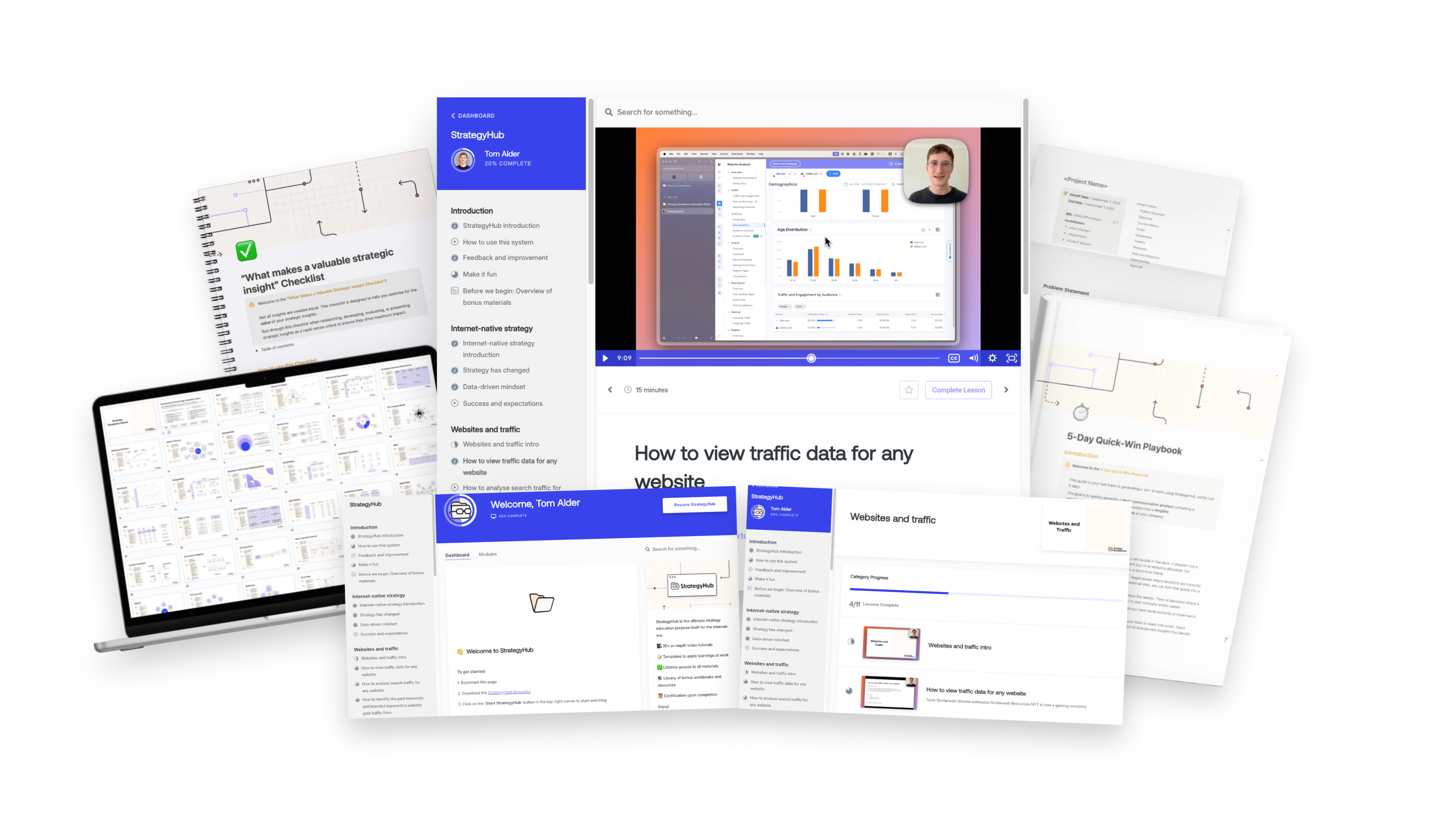
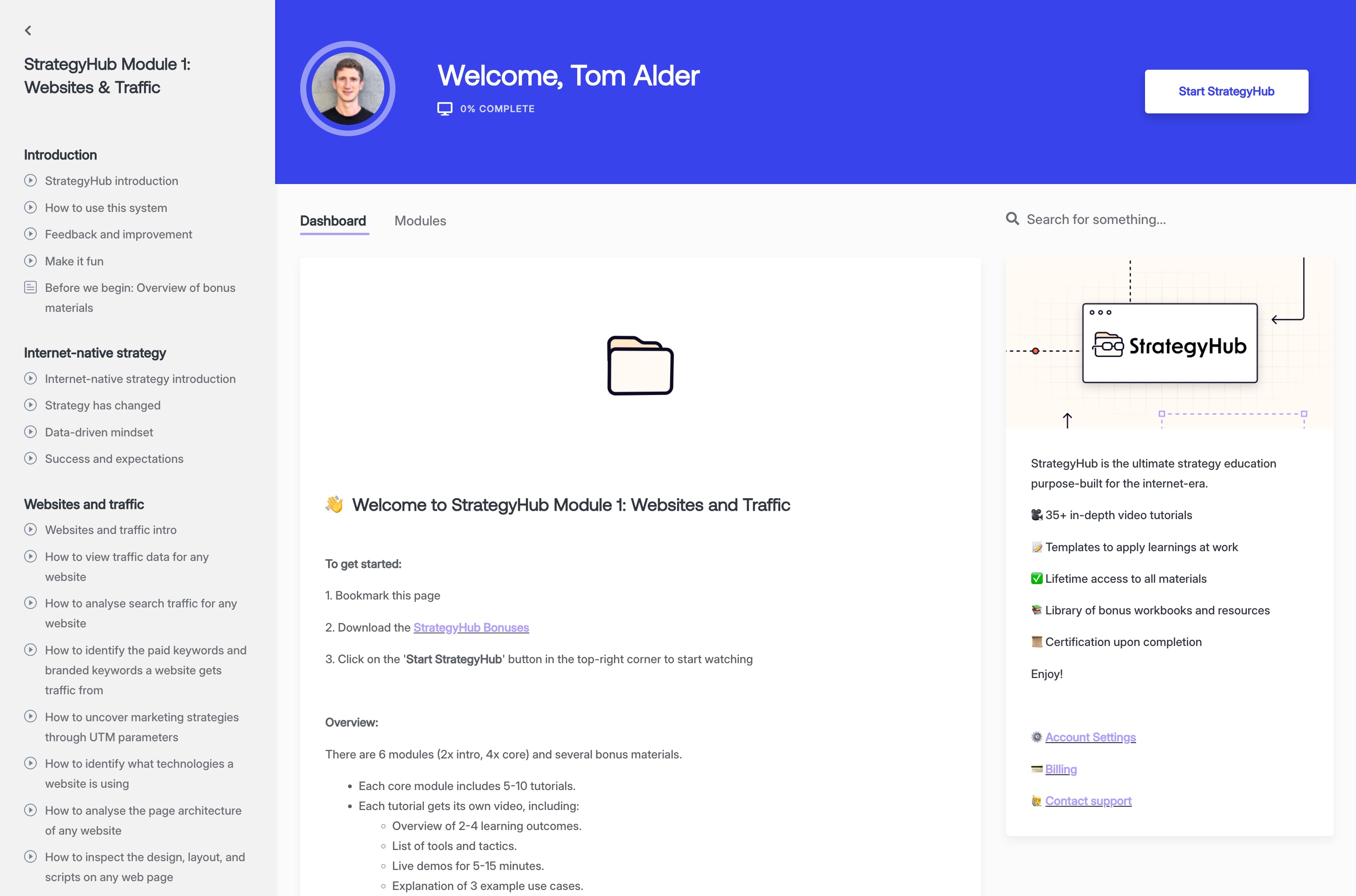
So I packaged everything into a structured video course called StrategyHub - the exact system I wish I'd had when I was struggling.
I built it by working closely with a group of beta testers: product managers at Google, strategy consultants at McKinsey, hungry operators at early-stage startups.

The feedback was overwhelming.
People were using it to generate strategic insights they'd never been able to find before - and it was transforming the way they worked.
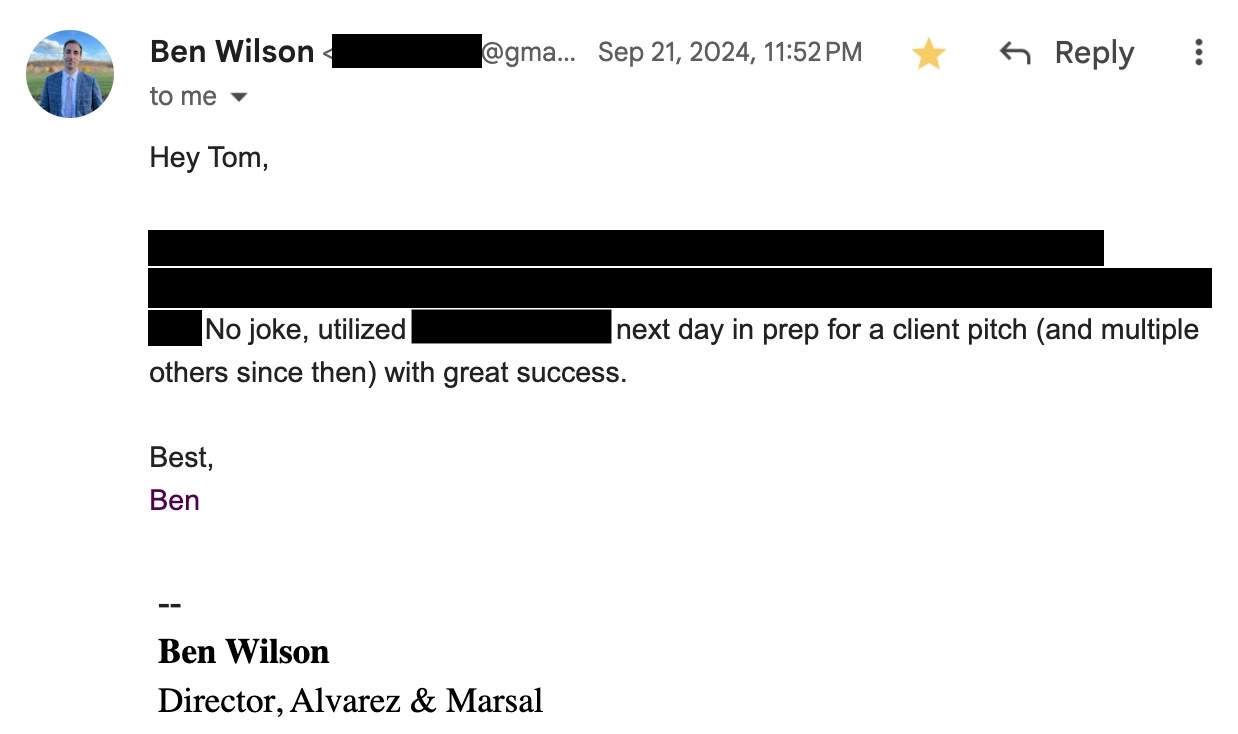
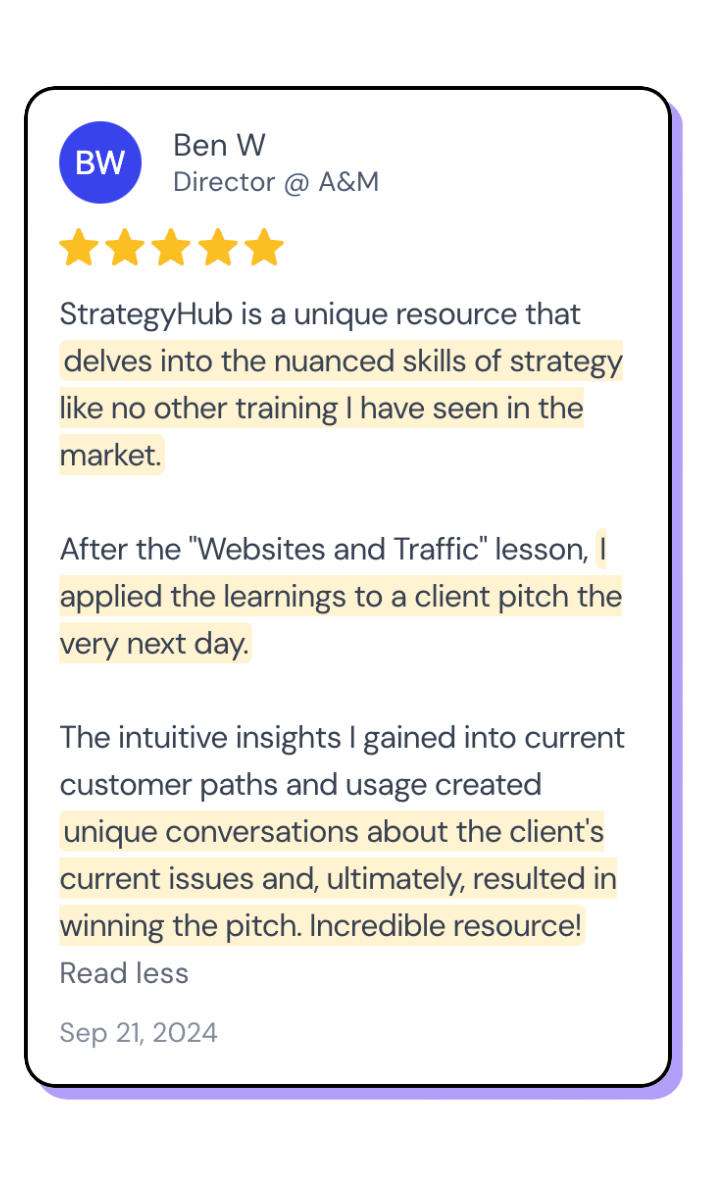
It became our flagship product, with over 150+ strategists using the system daily to lead projects, create company-defining strategies, and land dream promotions / clients / growth opportunities.
And now, for the first time, I'm making the foundational module Websites & Traffic available as a standalone product.